



When shipping goods internationally, understanding how your freight charge is calculated can save you significant money. Most buyers focus only on the actual weight of their package — but carriers often charge based on volumetric weight instead.
Here are the three main calculation methods used by shipping companies:
| Method | What It Means | Best For |
|---|---|---|
| Full Volumetric | Charge whichever is heavier: actual weight OR volumetric weight | Standard air/sea freight |
| Half Volumetric | Average of actual weight and volumetric weight | Balanced pricing |
| No Volumetric | Charge only actual weight, ignore size | Small, dense items |
What Is Full Volumetric?
Full Volumetric means the carrier charges whichever is heavier — the actual weight of your goods or the volumetric weight (also called “dimensional weight”).
Volumetric Weight Formula:
Volumetric Weight (kg) = Length (cm) × Width (cm) × Height (cm) ÷ 6000
Key Rules:
- Even if you use parcel bags, if the volumetric weight exceeds actual weight, you pay for volume
- The carrier always compares both weights and charges the higher one
- Decimal rules apply: below X.4 rounds down, X.5 and above rounds up
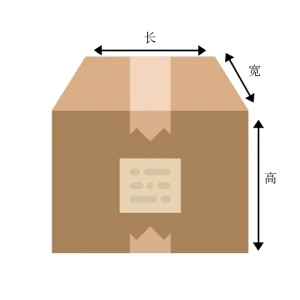
Example 1: Volumetric Weight Wins
| Measurement | Value |
|---|---|
| Actual weight | 15 kg |
| Dimensions | 50 cm × 50 cm × 50 cm |
| Volumetric weight | (50 × 50 × 50) ÷ 6000 = 20.83 kg |
| Rounded up | 21 kg |
Result: Volumetric weight (21 kg) > Actual weight (15 kg)
You pay for 21 kg
Example 2: Actual Weight Wins
| Measurement | Value |
|---|---|
| Actual weight | 25 kg |
| Dimensions | 60 cm × 55 cm × 42 cm |
| Volumetric weight | (60 × 55 × 42) ÷ 6000 = 23.1 kg |
| Rounded down | 23 kg |
Result: Actual weight (25 kg) > Volumetric weight (23 kg)
You pay for 25 kg
What Is Half Volumetric?
Half Volumetric balances the cost by averaging the actual weight and volumetric weight.
Half Volumetric Formula:
Chargeable Weight = (Actual Weight + Volumetric Weight) ÷ 2
This method is fairer for bulky but lightweight items — you don’t pay the full volumetric penalty, but you don’t get completely free volume either.
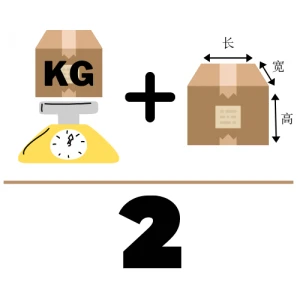
Example: Half Volumetric Calculation
| Measurement | Value |
|---|---|
| Actual weight | 15 kg |
| Volumetric weight | 21 kg |
| Calculation | (15 + 21) ÷ 2 = 18 kg |
Result: You pay for 18 kg instead of the full 21 kg
Decimal rule: If the result is 18.68 kg, it rounds up to 19 kg. If below 18.4 kg, it rounds down to 18 kg.
What Is No Volumetric?
No Volumetric means the carrier ignores dimensions entirely and charges only the actual weight of the goods.
Key Benefit:
- You pay only for what your package weighs, regardless of how large or bulky it is
- Ideal for lightweight but oversized items or when you want predictable pricing
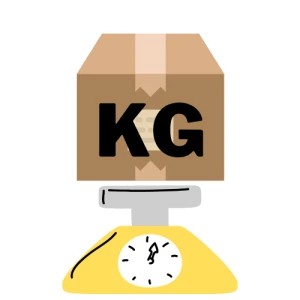
Example: No Volumetric Calculation
| Measurement | Value |
|---|---|
| Actual weight | 15 kg |
| Dimensions | 50 cm × 50 cm × 50 cm |
| Volumetric weight | (50 × 50 × 50) ÷ 6000 = 20.83 kg |
| Rounded up | 21 kg |
Result: Even though volumetric weight is 21 kg, you only pay for 15 kg
Best for: Small, heavy items like books, metal parts, or dense electronics where actual weight exceeds volumetric weight.
Quick Comparison: Which Method Saves You Money?
| Scenario | Full Volumetric | Half Volumetric | No Volumetric |
|---|---|---|---|
| Actual: 15 kg, Volume: 21 kg | Pay 21 kg | Pay 18 kg | Pay 15 kg ✅ |
| Actual: 25 kg, Volume: 23 kg | Pay 25 kg | Pay 24 kg | Pay 25 kg |
| Actual: 10 kg, Volume: 30 kg | Pay 30 kg | Pay 20 kg | Pay 10 kg ✅ |
| Actual: 20 kg, Volume: 20 kg | Pay 20 kg | Pay 20 kg | Pay 20 kg |
Rounding Rules Summary
| Decimal Range | Rounding |
|---|---|
| XX.0 – XX.4 | Round down to XX kg |
| XX.5 – XX.9 | Round up to (XX+1) kg |
Example: 20.83 kg → 21 kg | 20.4 kg → 20 kg | 18.68 kg → 19 kg
Which Method Should You Choose?
| Your Situation | Recommended Method |
|---|---|
| Small, heavy items (books, tools) | No Volumetric |
| Regular e-commerce packages | Half Volumetric |
| Large, lightweight items (pillows, empty boxes) | Half Volumetric or negotiate |
| Standard air freight | Full Volumetric (industry standard) |
| Bulk business shipping | Compare all three and negotiate |
Conclusion
Mastering how volumetric and actual weight calculations work is essential for keeping your cross-border supply chain profitable. Whether you are moving bulk merchandise via China to Malaysia sea freight—where understanding how long shipping from China to Malaysia by sea takes helps schedule your restocks—or utilizing China to Malaysia air freight for urgent inventory, partnering with the fastest freight forwarder in Malaysia ensures transparent pricing with no unexpected volumetric penalties.
In short, understanding volumetric weight calculations helps you:
- ✅ Predict shipping costs before you buy
- ✅ Choose the right shipping method for your goods
- ✅ Avoid bill shock when your “light” package costs more than expected
- ✅ Negotiate better rates with your freight forwarder