


If you have ever browsed local e-commerce marketplaces like Shopee, Lazada, or TikTok Shop Malaysia and wondered where high-volume sellers source their inventory at rock-bottom prices, the answer is almost always 1688.com.
As Alibaba Group’s dedicated domestic B2B wholesale platform, 1688 acts as the core manufacturing engine of China, giving commercial buyers direct access to primary industrial clusters, raw component fabricators, and original equipment manufacturers (OEMs) without intermediary trading markups.
However, learning how to buy from 1688 to Malaysia comes with tangible friction.
Unlike export-oriented portals such as Alibaba.com or AliExpress, 1688 is engineered exclusively for China’s internal domestic commerce. The entire website operates in Simplified Chinese, suppliers quote in Chinese Yuan (RMB/CNY), cross-border logistics are not natively integrated for direct consumer delivery, and the checkout system expects domestic payment rails.
This practical guide walks you through every stage of sourcing on 1688 from Malaysia—covering account creation, supplier screening, overcoming payment blocks, and setting up reliable door-to-door freight forwarding.
READ ALSO:
How Long Does Shipping From China To Malaysia By Sea Take?
8 Fastest Freight Forwarders in Malaysia
How to Use Pay For Me Service for RMB Payments
目录
-
- TLDR; Can You Buy Directly from 1688 to Malaysia?
- What Is 1688 and Why Source Here Instead of Alibaba or Taobao?
- How to Buy from 1688 Without Agent vs With Agent
- Step-by-Step: How to Buy 1688 Products from Malaysia
- Product Sourcing Strategies on a Chinese-Only Platform
- How to Vet 1688 Suppliers & Filter Out Middlemen
- How To Negotiate MOQs and Prices On Aliwangwang
- 4 Ways To Pay On 1688 From Malaysia
- Arranging China Domestic Delivery & Malaysian Freight Forwarding
- Hidden Shipping Costs & Malaysia Customs Tips
TLDR; Can You Buy Directly from 1688 to Malaysia?
No. 1688 sellers do not ship internationally to Malaysian addresses; they deliver solely to domestic Chinese destinations. You must route purchases through a China-based freight forwarder’s warehouse hub.
Malaysian individuals can sign up using a local +60 mobile number or by logging in through a verified Taobao/Alipay account.
Paying directly on 1688 is the main bottleneck. While selective international cards are occasionally accepted, foreign cards face transaction limits and an extra 3% fee. Malaysian importers bypass this using Alipay Pay-for-You (代付), business settlement accounts like WorldFirst (跨境宝 / World Pay), or local procurement agents.
upplier dispatch to your forwarder’s Guangzhou/Shenzhen hub takes 2 to 4 days. International air cargo to Peninsular Malaysia takes 3 to 5 working days; ocean consolidation (LCL) takes 14 to 21 working days.
If you prefer to bypass language barriers, real-name account verifications, and cross-border currency conversion fees, you can use our Buy For Me Service, allowing us to source, inspect, and purchase directly from your 1688 supplier links.
What Is 1688 and Why Source Here Instead of Alibaba or Taobao?
To grasp why commercial importers spend time navigating an all-Chinese interface, it helps to understand where 1688 sits inside Alibaba Group’s digital marketplace hierarchy:
- Taobao: A consumer-to-consumer (C2C) and retail platform built for everyday shoppers inside China. Prices are retail-tier, unit margins are baked in, but purchasing single items is straightforward.
- Alibaba.com: An export-facing international B2B platform. While it features an English interface, accepts global credit cards, and quotes shipping to Port Klang, prices are quoted in USD and often feature heavy markups from export trading companies targeting Western buyers.
- 1688.com: The domestic Chinese wholesale portal. Factories sell here to domestic distributors, brand-name physical retail chains, and Taobao store operators. The pricing on 1688 is factory-gate level, typically 20% to 50% cheaper than Alibaba.com for identical product runs.
When you buy from 1688, you are stepping into the true source tier of global manufacturing. However, because these factories operate on narrow wholesale margins, they do not offer English customer service representatives, free international returns, or direct air waybills to Kuala Lumpur.
How To Buy from 1688 Without Agent Vs With Agent
A frequent question discussed across importer communities and Reddit logistics boards is whether it makes sense to handle 1688 purchasing independently or hire a dedicated sourcing agent. The best route depends on your order size, frequency, and technical comfort with domestic Chinese platforms.
| Comparison Parameter | Buying Without an Agent (DIY Self-Sourcing) | Buying With a Sourcing / Buying Agent |
|---|---|---|
| Target Audience | Experienced e-commerce sellers, Chinese speakers, sample purchasing | SMEs, commercial businesses, non-Chinese speakers, bulk container buyers |
| Account Requirements | Verified 1688 account + passport-verified personal Alipay profile | None required; you submit 1688 links or product photos to your agent |
| Payment Mechanism | Foreign Visa/Mastercard (subject to failures) or business World Pay | Direct Malaysian Ringgit (MYR) bank transfer via FPX or local corporate transfer |
| Quality Control (QC) | Zero quality checks; you only inspect items once they reach Malaysia | Warehouse checks incoming cartons, verifies counts, and checks for physical flaws |
| Packaging & Crating | Dependent on factory packaging (often fragile domestic cardboard) | Custom repacking, shrink wrapping, palletization, and wooden crating available |
| Dispute Resolution | You handle return negotiations directly on 1688 under domestic rules | Agent communicates directly with the seller and processes factory exchanges |
If you have fluent Mandarin skills, are sourcing non-fragile goods, and have access to an eligible payment channel, ordering direct gives you immediate communication with the supplier. For commercial volumes, mixed SKU orders, or fragile items like glass and furniture, working with an experienced agent prevents expensive miscommunications and packaging damage.
Step-by-Step: How To Buy 1688 Products From Malaysia
Step 1: Account Registration Via Mobile
To register on 1688 directly from Malaysia, follow these setup steps:
- Navigate to
1688.comon desktop or download the official 1688 mobile app from the Apple App Store or Google Play Store (the mobile app generally translates more cleanly and offers better integrated visual search tools). - Click on 免费注册 (Sign up for free) in the top header.
- Select personal account registration (个人账户). Change the international dialing prefix to
+60for Malaysia, enter your mobile number without the leading zero, and complete the SMS verification challenge. - Alternative Registration: If the 1688 direct SMS code times out, register an account on 淘宝 first using your Malaysian phone number, verify it, and then use the “Log in with Taobao” (淘宝快捷登录) button on 1688. Because both sites belong to the Alibaba ecosystem, credentials synchronize seamlessly.
Step 2: Real-Name Identity Verification (实名认证)
Browsing 1688 without verified credentials will result in frequent CAPTCHA loops or sudden account locks. To stabilize your account:
- Download the international Alipay app and register with the same Malaysian mobile phone number linked to your 1688 account.
- Complete Real-Name Verification (实名认证) inside Alipay by scanning your valid Malaysian passport. Verification typically processes within 1 to 24 hours.
- Inside your 1688 account settings, navigate to Account Management (账户管理) and link your verified Alipay ID. This confirms your profile legitimacy across the entire platform.
Product Sourcing Strategies on a Chinese-Only Platform
Because 1688 does not index English product descriptions, typing standard English keywords into the search box returns limited, inaccurate results. Use these three sourcing techniques instead:
1. Visual Search (Camera Icon)
The camera search function is the most accurate tool on 1688. Save clear images of the item you want from Shopee, Amazon, or Instagram. Click the camera icon in the 1688 desktop or mobile search bar and upload the image. The platform’s visual matching algorithm will pull up direct factory listings offering the identical design, complete with tiered wholesale price matrices.
2. Translation-Driven Keyword Searches
Use DeepL or Google Translate to convert your English queries into Simplified Chinese. For technical products, avoid generic translations. For example, instead of searching for “portable blender,” search for the exact Chinese industrial classification: 便携式榨汁杯 (portable juice cup) or 无线果汁机 (wireless fruit juice machine). Adding industry keywords like 厂家直销 (factory direct sales) or 批发 (wholesale) helps surface primary manufacturers over small resellers.
3. Deconstructing Shopee / Lazada Best Sellers
If you see a trending consumer item on local Malaysian e-commerce platforms, right-click the listing’s main hero photo, run it through 1688’s image search, and you will almost always find the exact manufacturer. You can compare the factory’s RMB tier pricing directly against retail Ringgit prices to calculate your gross margins.
How to Vet 1688 Suppliers & Filter Out Middlemen
Not every seller on 1688 is an original manufacturer. Many accounts are domestic trading agents, liquidators, or secondary distributors who re-list factory catalogs with added margins. To find legitimate primary suppliers, look for these trust verification markers:
| Verification Marker | Visual Identifier | What It Means for Buyers |
|---|---|---|
| Strength Merchant (实力商家) | Bull Head Emblem (牛头标) | The seller has paid substantial security deposits to 1688 and passed on-site operating inspections by third-party audit firms (such as SGS or TÜV Rheinland). |
| Super Factory (超级工厂) | Factory / Cog Icon | Verified production facilities, specialized machinery, high-volume production output, and dedicated enterprise QC processes. |
| Repeat Purchase Rate (回头率) | Percentage metric on store profile | Aim for a reorder rate of 20% or higher. High repeat purchasing indicates consistent quality and reliable order fulfillment for commercial clients. |
| Factory Years in Business | Number badge (e.g., 5年, 8年) | Stores with 5+ continuous years of platform operation present lower fraud risk and demonstrate established supply chain reliability. |
Checking the Business License (营业执照)
Open the supplier’s main profile page, navigate to company details (公司档案), and view their verified business registration. Read the Business Scope (经营范围) carefully:
- If the registration states words like 生产 (Production), 制造 (Manufacturing), or 加工 (Processing), they operate their own production facilities.
- If the scope only lists 贸易 (Trading), 商贸 (Commerce), or 批发 (Wholesaling), they are an intermediary company acting as a broker between you and the real factory.
How to Negotiate MOQs and Prices on Aliwangwang
Every 1688 store features an integrated messaging tool called Aliwangwang (阿里旺旺), visible as a blue droplet chat bubble on listings. Suppliers expect communication, and listed prices are rarely set in stone for commercial volume.
Key Sourcing Phrases to Use:
- Asking for samples:
可以买一个样品看质量吗?(Can I purchase one sample to check the quality?) - Asking about Minimum Order Quantity:
请问这款起订量(MOQ)是多少?(What is the minimum order quantity for this item?) - Inquiring about stock levels:
请问现在有现货吗?什么时候能发货?(Do you have ready stock now? When can you dispatch?) - Negotiating tier pricing for large volumes:
如果我批量订购500件,单价可以优惠到多少?(If I place a batch order for 500 pieces, what discounted unit price can you offer?) - Confirming domestic freight charges:
寄到广州白云区仓库包邮吗?(Is delivery free to a warehouse in Baiyun District, Guangzhou?)
Always conduct initial sample discussions directly within the official Aliwangwang chat. The chat logs serve as primary evidence if you ever need to file an official transaction dispute through 1688’s customer service arbitration system.
4 Ways To Pay On 1688 From Malaysia
Because 1688 is an internal domestic portal, checking out is the most common roadblock for foreign buyers. You cannot simply input a standard Malaysian Maybank, CIMB, or Public Bank debit card and complete checkout like on Amazon. Here are the four working payment paths for Malaysian importers:
1. Alipay “Pay-For-You” / Friend Pay (找人代付)
This is the most common method for small-to-medium Malaysian importers. When you submit an order on 1688, proceed to the checkout screen and select the 找人代付 (Ask someone to pay) tab. Enter the Alipay account username or mobile number of your purchasing partner or logistics agent.
The system generates a payment request within their Alipay account. Your agent settles the order directly in RMB, while you pay your agent locally in Ringgit via DuitNow or online banking. The purchase remains tracked inside your own 1688 profile, allowing you to monitor shipping and seller communication directly.
2. International Credit/Debit Cards (Select Listings)
Alibaba Group has enabled direct international card checkout for certain verified overseas accounts on select 1688 product listings. While convenient for buying initial samples, international cards have distinct downsides:
- Transactions incur a mandatory 3% cross-border handling fee.
- Your Malaysian issuing bank applies foreign exchange markup spreads on the MYR-to-RMB conversion.
- Malaysian bank fraud algorithms frequently block high-value, recurring transactions made on domestic Chinese platforms.
3. Enterprise Cross-Border Portals (WorldFirst / Kuajingbao)
Established businesses registered with Malaysia’s SSM can set up enterprise cross-border settlement facilities like WorldFirst (World Pay / 跨境宝). This service connects directly to your verified 1688 buyer account, allowing you to convert corporate MYR or USD balances directly into offshore CNH balances. It provides formal commercial payment trails, which are useful for tax audits and business accounting.
4. Sourcing & Procurement Concierge
If managing real-name account verifications, payment limits, and currency exchange spreads is impractical for your workflow, an assisted purchasing service provides a simple alternative. You forward your product links, quantities, and specifications, and the service settles the order with the factory and issues a single Ringgit invoice covering both goods and door-to-door delivery.
Need help clearing payment for a time-sensitive factory run? Explore our Pay For Me Service to complete supplier payments with clear local Ringgit pricing.
Arranging China Domestic Delivery & Malaysian Freight Forwarding
Because 1688 sellers do not ship directly to Malaysia, all orders require a two-stage logistics setup: domestic transit within China, followed by cross-border transport to your Malaysian address.
Stage 1: Domestic Factory Delivery (2–4 Days)
The factory dispatches your order via domestic Chinese couriers (like SF Express, ZTO, or J&T China) to your freight forwarder’s warehouse hub, located in central logistics zones like Guangzhou, Shenzhen, or Yiwu.
Stage 2: Cross-Border Forwarding to Malaysia
Your forwarder receives the shipment, matches it to your unique client shipping ID, conducts an external inspection, consolidates multiple packages if needed, and dispatches the cargo internationally.
Configuring Your 1688 Warehouse Delivery Address
- Log into your 1688 account and click My 1688 → Personal Center → 收货地址 (Delivery Addresses).
- Paste the Chinese street address provided by your forwarder, selecting the matching Province (广东省), City (广州市/深圳市), and District (区).
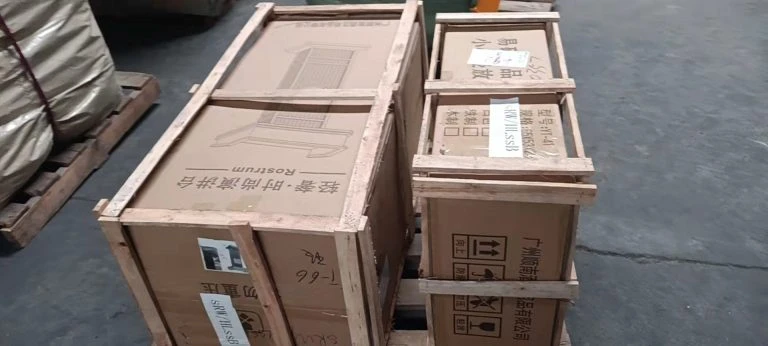
- Critical Requirement: Ensure your forwarder’s Client Marking Code / User ID is written in the recipient name line or address line (e.g.,
收件人: 张三 / VT-88219). Domestic Chinese warehouses handle thousands of parcels daily; without your client marking code on the outside of the box, identifying which shipment belongs to you causes significant tracking delays.
To choose the right shipping method between air cargo and container ocean freight, read our breakdown of top freight forwarders in Malaysia to evaluate transit speeds and handling options.
Hidden Shipping Costs & Malaysia Customs Tips
Calculating the true landed cost of importing from 1688 requires accounting for more than the factory wholesale unit price. Missing these supply chain factors can erode your projected profit margins:
1. Volumetric Weight Surcharges (Air Freight)
Air cargo carriers charge based on Chargeable Weight—the greater of actual scale weight and volumetric weight (calculated as Length × Width × Height (cm) / 6000). When sourcing lightweight, bulky items like plush toys, cushions, or storage organizers, your chargeable weight can easily end up triple the actual scale weight. Instruct your supplier to use compact packaging, or request parcel repacking from your forwarder to remove dead air.
2. Normal Goods vs. Sensitive Goods Classifications
Malaysian logistics lines split cargo into two categories:
- Normal Goods (普货): Standard textiles, apparel, non-branded phone cases, stainless steel utensils, and non-magnetic plastics.
- Sensitive Goods (特货): Products containing lithium batteries, liquids, gels, powders, food items, magnets, branded trademark logos, or high-value integrated electronics. Sensitive items must travel via dedicated export lines, which carry a slight surcharge per kilogram or CBM to handle customs requirements.
3. Malaysian Import Taxes & Low-Value Goods (LVG) Tax
Under Malaysian customs legislation, commercial goods imported across borders are subject to Sales and Service Tax (SST) and category-specific import tariffs based on the product’s Harmonized System (HS) Code. When using full-service consolidated sea shipping (LCL), freight forwarders typically handle clearance through an all-inclusive CBM rate covering import duties, handling fees, and local transport, avoiding unexpected customs tax bills upon port arrival.
Ready to consolidate wholesale factory orders from China without unexpected costs? Check out our Ship For Me Service to start managing your 1688 cargo flows smoothly.
FAQs About Buying From 1688 To Malaysia
Can I order directly from 1688?
Yes, you can register, search for products, negotiate with suppliers, and submit purchase orders directly on 1688. However, 1688 suppliers do not provide direct international shipping to Malaysia. You must use a domestic Chinese warehouse address managed by a freight forwarder to consolidate your orders and handle international transport to your Malaysian address.
Can 1688 ship to Malaysia?
No. 1688 is a domestic Chinese B2B portal designed for internal commerce. Suppliers do not prepare export documents or ship goods overseas. To import goods into Malaysia, you need to provide the supplier with a domestic Chinese warehouse address (typically in Guangzhou or Shenzhen) operated by an international freight forwarder.
How do I pay on 1688 from Malaysia?
Malaysian buyers have four primary payment options: using Alipay’s “Pay-for-You” (找人代付) feature via an agent, linking an international Visa or Mastercard for eligible products, setting up a cross-border business account like WorldFirst (World Pay), or using an end-to-end purchasing service to settle supplier invoices directly in Malaysian Ringgit.
Is it safe to buy from 1688?
Yes. Transactions made through 1688 are secured by Alipay’s escrow system, meaning funds are only released to the supplier after the order is confirmed delivered to your designated Chinese warehouse address. To minimize product quality issues, source from verified Strength Merchants (实力商家), check repeat purchase rates, and order physical product samples before placing volume orders.
Navigating 1688 for the first time can feel a bit overwhelming, especially when you’re staring at an all-Chinese checkout screen and wondering if your payment actually went through. But once you set up your warehouse address and get your first small order delivered, the platform becomes second nature.
Treat your initial purchases as low-risk test runs, verify sample quality before committing your capital, and let a reliable forwarder handle the logistics heavy lifting so you can focus entirely on growing your margins back home.